A concrete driveway is a popular and durable choice for many homeowners, providing a stable and attractive surface for parking vehicles and enhancing the curb appeal of a property. However, before embarking on a driveway installation project, one of the first questions that many people have is, “How much will it cost?”
The answer to this question can vary widely depending on a range of factors, such as the size and complexity of the project, the materials and finishes used, and the location and conditions of the site. In this article, we’ll break down the key cost components of a typical concrete driveway installation, and provide some ballpark estimates and considerations to help you plan and budget for your project.
Cost Components
The total cost of a concrete driveway installation can be broken down into several main components, each of which can have a significant impact on the final price. These components include:
Material Quality
One of the biggest factors that can affect the cost of a concrete driveway is the quality and type of materials used. Concrete is typically made up of a mixture of cement, aggregates (such as sand and gravel), water, and additives, and the specific proportions and grades of these ingredients can vary widely depending on the desired strength, durability, and appearance of the finished surface.
In general, higher-quality materials will cost more than lower-quality ones, but they can also provide better performance and longevity over time. For example, using a higher-grade cement or specialty aggregates can increase the compressive strength and freeze-thaw resistance of the concrete, while using decorative additives or colored pigments can enhance the visual appeal and customization of the surface.
Labor Rates
Another significant cost component of a concrete driveway installation is the labor required to prepare the site, form the edges, pour and finish the concrete, and clean up afterward. Labor rates can vary widely depending on the experience, skills, and reputation of the contractor or crew, as well as the complexity and scope of the project.
In general, labor costs can account for anywhere from 30% to 50% or more of the total project cost, depending on the specific requirements and challenges of the job. For example, a simple rectangular driveway on a flat site with easy access may require less labor and equipment than a curved or sloped driveway on a heavily wooded or rocky site.
Size Requirements
Of course, one of the most obvious factors that can affect the cost of a concrete driveway is the size of the surface. Concrete is typically sold and installed by the square foot or cubic yard, with prices varying based on the slab’s thickness, reinforcement, and finish.
As a rough estimate, a basic concrete driveway can cost anywhere from $6 to $12 or more per square foot, depending on the factors mentioned above. For example, a 20 x 30 foot driveway (600 square feet) could cost anywhere from $3,600 to $7,200 or more, not including any additional features or upgrades.
Design Complexity
Another factor that can significantly impact the cost of a concrete driveway is the complexity and customization of the design. While a basic rectangular or square driveway may be relatively straightforward and affordable, more complex or decorative designs may require additional labor, materials, and equipment, thereby increasing the overall cost.
Some examples of design features that can add to the cost of a concrete driveway include:
- Curved or angled edges
- Multiple levels or tiers
- Stamped or textured patterns
- Exposed aggregate finishes
- Integral color or staining
- Decorative borders or inlays
- Custom logos or graphics
In general, the more complex and customized the design, the higher the cost of the driveway will be. However, these features can also add significant value, functionality, and visual appeal to the finished surface, and may be worth the investment for some homeowners.
Base Price Factors
In addition to the main cost components mentioned above, there are also several base price factors that can impact the overall cost of a concrete driveway installation. These factors are typically related to the preparation and setup of the site, and can vary depending on the specific conditions and requirements of the project. Some common base price factors include:
Site Preparation
Before any concrete can be poured, the site must be properly prepared to ensure a stable and level base for the driveway. This can involve a range of tasks, such as:
- Clearing and grading the site
- Removing any existing vegetation, debris, or structures
- Excavating and compacting the soil
- Installing any necessary drainage or utility lines
- Placing and compacting a sub-base layer of gravel or crushed stone
The cost of site preparation can vary widely depending on the size, condition, and accessibility of the site, as well as any special requirements or challenges. In general, site preparation can add anywhere from $1 to $5 or more per square foot to the total cost of the driveway.
Concrete Grade
As mentioned earlier, the quality and grade of the concrete mix can have a significant impact on the performance, durability, and cost of the finished driveway. In general, concrete is classified by its compressive strength, which is measured in pounds per square inch (psi) and indicates how much weight the concrete can support without cracking or failing.
For residential driveways, a minimum compressive strength of 3,000 psi is typically recommended, although higher strengths of 4,000 psi or more may be used for heavier traffic or loads. Higher-strength concrete will generally cost more than lower-strength mixes, but can also provide better resistance to wear, cracking, and freeze-thaw damage over time.
Reinforcement
Another factor that can impact the base price of a concrete driveway is the type and amount of reinforcement used. Reinforcement is typically added to the concrete in the form of steel mesh, rebar, or fibers, and helps to distribute the load and prevent cracking and settlement of the slab.
The specific type and spacing of reinforcement will depend on the size, thickness, and design of the driveway, as well as any local building codes or standards. In general, adding reinforcement will increase the cost of the driveway by $0.50 to $1.00 or more per square foot, but can also significantly improve its strength and longevity.
Finish Options
Finally, the type and complexity of the finish used on the surface of the concrete can also impact the base price of the driveway. There are many different finish options available, each with its own unique texture, color, and pattern, and each with its own associated costs and installation requirements.
Some common finish options for concrete driveways include:
- Broom finish: A simple and affordable option that creates a slightly rough, slip-resistant surface by dragging a broom across the wet concrete.
- Exposed aggregate: A decorative option that reveals the natural stone or gravel in the concrete mix by removing the top layer of cement paste through washing, brushing, or chemical etching.
- Salt finish: A subtle and slip-resistant option that creates a speckled texture by broadcasting rock salt onto the surface of the wet concrete and then washing it away after the concrete has set.
- Stamped finish: A highly customizable option that simulates the look and texture of brick, stone, tile, or wood by pressing molds or stamps into the surface of the wet concrete.
- Stenciled finish: A decorative option that creates intricate patterns, designs, or logos on the surface of the concrete by applying color hardeners or release agents through stencils or templates.
In general, the more complex and labor-intensive the finish, the higher the cost of the driveway will be. However, a decorative or customized finish can also add significant value, beauty, and functionality to the finished surface, and may be worth the extra investment for some homeowners.
Additional Considerations
Beyond the base price factors and finish options, there are also several additional considerations that can impact the overall cost and complexity of a concrete driveway installation project. These considerations may not be included in the initial quote or estimate, but can add significant expenses or challenges to the project if not properly planned or budgeted for. Some common additional considerations include:
Drainage Solutions
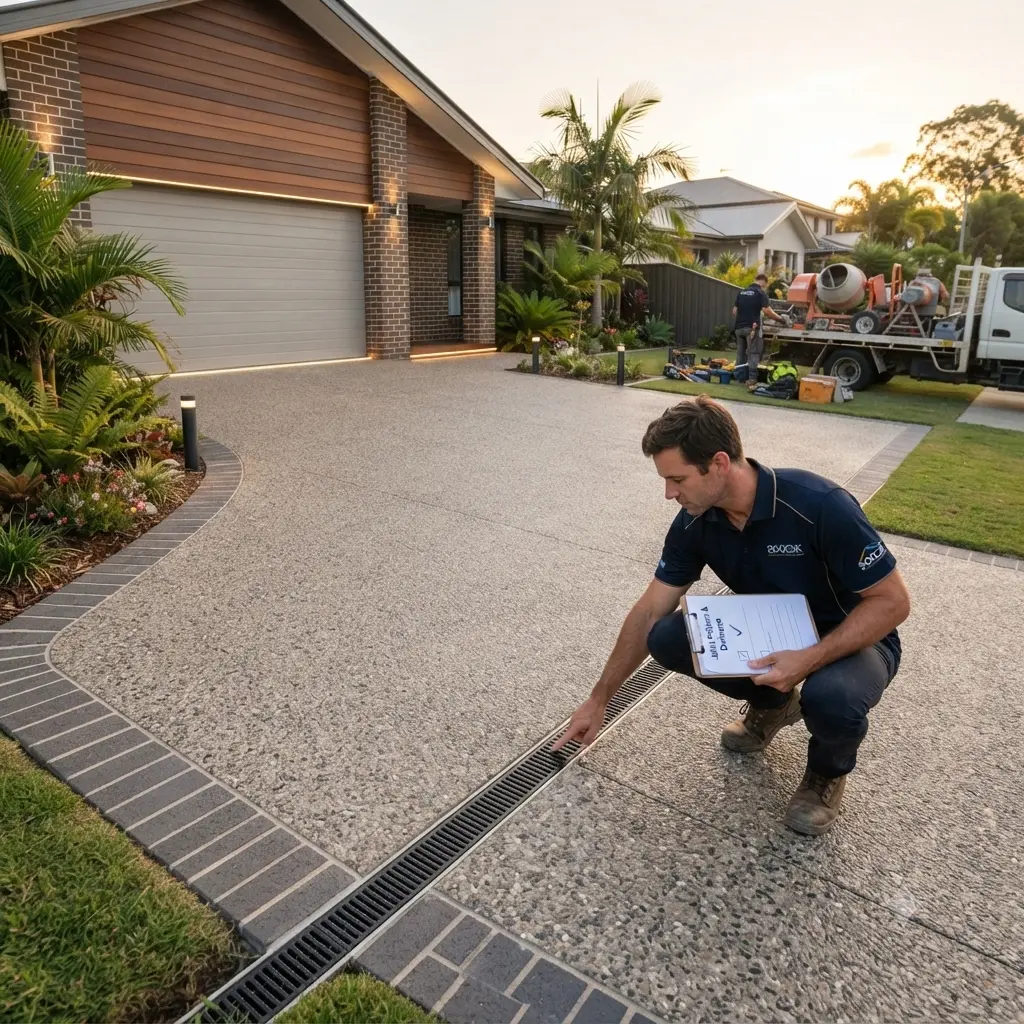
Proper drainage is essential for any concrete driveway, as it helps to prevent water from pooling on the surface or seeping into the subgrade and causing damage or settlement over time. Depending on the slope, soil conditions, and surrounding landscape of the site, different drainage solutions may be needed to ensure proper water management and long-term durability of the driveway.
Some common drainage solutions for concrete driveways include:
- Grading and sloping the surface to direct water away from the house and towards the street or a drainage swale
- Installing catch basins, trench drains, or French drains to collect and redirect surface water or groundwater away from the driveway
- Using permeable or porous concrete mixes that allow water to filter through the surface and into the subgrade, reducing runoff and improving traction
The cost of drainage solutions can vary widely depending on the site’s specific needs and challenges, but can add anywhere from a few hundred to a few thousand dollars or more to the driveway’s total cost.
Edge Treatments
Another consideration that can impact the cost and appearance of a concrete driveway is the type and style of edge treatment used. Edge treatments are the borders or margins of the driveway that provide a finished and polished look, as well as help to contain the concrete and prevent cracking or chipping along the edges.
Some common edge treatments for concrete driveways include:
- Formed edges: Created by placing temporary forms or molds along the perimeter of the driveway and pouring the concrete up to the forms, resulting in a clean and straight edge.
- Tooled edges: Created by using special edging tools to shape and smooth the edges of the wet concrete by hand, resulting in a rounded or beveled profile.
- Decorative edges: Created by using stamping mats, stencils, or other decorative elements to imprint patterns, textures, or colors along the edges of the driveway, matching or complementing the main surface.
- Exposed edges: Created by leaving the edges of the driveway exposed and unfinished, often with a rough or rustic texture, and sometimes with decorative aggregates or stones embedded in the surface.
The cost of edge treatments can vary depending on the length, complexity, and materials used, but can add anywhere from a few dollars to a few hundred dollars or more to the total cost of the driveway.
Color Options
Color is another factor that can significantly impact the appearance and cost of a concrete driveway. While traditional gray concrete is the most common and affordable option, there are many ways to add color and customize the look of the surface to match or complement the style and palette of the home and landscape.
Some common color options for concrete driveways include:
- Integral color: Created by adding liquid or dry pigments to the concrete mix before it is poured, resulting in a consistent and permanent color throughout the entire thickness of the slab.
- Color hardener: Created by broadcasting a dry shake color hardener onto the surface of the wet concrete and then troweling it in, resulting in a dense and durable layer of color on top of the slab.
- Stains and dyes: Created by applying liquid or solvent-based stains or dyes to the surface of the cured concrete, resulting in a translucent or opaque color that penetrates into the pores of the concrete.
- Sealers and coatings: Created by applying tinted or clear sealers or coatings to the surface of the concrete, resulting in a protective and decorative layer that enhances the color and sheen of the slab.
The cost of color options can vary widely depending on the type, quality, and amount of color used, as well as the size and complexity of the driveway. In general, integral color and color hardeners will add $1 to $5 or more per square foot to the cost of the driveway, while stains, dyes, and sealers will add $2 to $10 or more per square foot, depending on the specific product and application.
Pattern Designs
Pattern is another design element that can add visual interest, texture, and customization to a concrete driveway, as well as help to break up large expanses of plain concrete and provide a more finished and polished look. There are many different pattern options available, each with its own unique style, scale, and installation method.
Some common pattern designs for concrete driveways include:
- Stamped patterns: Created by pressing large mats or stamps with embossed patterns into the surface of the wet concrete, simulating the look and texture of brick, stone, tile, or wood.
- Stenciled patterns: Created by placing adhesive stencils or templates onto the surface of the concrete and then applying color hardeners, release agents, or stains through the openings, resulting in intricate and colorful designs.
- Sawcut patterns: Created by cutting shallow grooves or lines into the surface of the cured concrete using a concrete saw or grinder, resulting in a grid, diamond, or custom pattern that helps to control cracking and provide visual interest.
- Exposed aggregate patterns: Created by placing decorative aggregates or stones into the surface of the wet concrete and then washing or etching away the top layer of cement to reveal the pattern and texture of the aggregates.
The cost of pattern designs can vary widely depending on the size, complexity, and materials used, as well as the skill and experience of the installer. In general, stamped and stenciled patterns will add $8 to $20 or more per square foot to the cost of the driveway, while sawcut and exposed aggregate patterns will add $2 to $12 or more per square foot, depending on the specific design and installation method.
Location Variables
In addition to the design and material considerations mentioned above, the location and site conditions of the driveway can also have a significant impact on the overall cost and feasibility of the project. Some common location variables that can affect the price and complexity of a concrete driveway installation include:
Access Difficulty
The ease or difficulty of accessing the site can be a major factor in the cost and timeline of a concrete driveway project. If the site is remote, steep, or heavily wooded, it may require additional equipment, labor, and materials to clear, grade, and prepare the area for the driveway. Similarly, if the site is in a dense urban or suburban area with limited space or strict regulations, it may require special permits, traffic control, or coordination with neighbors or utilities to complete the work safely and efficiently.
In general, sites with difficult access or constraints will add to the cost and duration of the project, as well as potentially limit the design and material options available. On the other hand, sites with easy access and ample space will generally be more affordable and flexible in terms of the scope and style of the driveway.
Soil Conditions
The type and quality of the soil beneath the driveway can also have a significant impact on the cost and performance of the concrete slab. Different soil types have different load-bearing capacities, drainage properties, and susceptibility to erosion, settlement, or frost heave, which can affect the stability and longevity of the driveway over time.
In general, soils with high clay content, poor drainage, or organic matter will require more extensive excavation, grading, and base preparation to ensure a solid and stable foundation for the concrete. This can add significant labor, material, and equipment costs to the project, as well as potentially require additional reinforcement or drainage solutions to prevent cracking, settling, or other damage to the slab.
On the other hand, soils with good drainage, compaction, and load-bearing capacity will generally require less site preparation and base material, and can support a thinner and more economical concrete slab.
Before starting a concrete driveway project, it’s important to have the soil tested and evaluated by a qualified professional to determine its suitability and any necessary modifications or enhancements. This can help to ensure that the driveway is properly designed and constructed to withstand the specific conditions and loads of the site, and can prevent costly repairs or replacements down the road.
Permit Requirements
Depending on the location, size, and scope of the driveway, there may be various permits, inspections, and approvals required by the local building department, zoning board, or homeowners association before work can begin. These requirements can vary widely by jurisdiction and project type, but may include:
- Building permits for new construction, additions, or alterations
- Zoning permits for setbacks, lot coverage, or land use
- Grading permits for excavation, fill, or drainage
- Encroachment permits for work in the public right-of-way or easements
- Environmental permits for stormwater management, erosion control, or tree protection
- Utility permits for water, sewer, gas, or electric connections or relocations
The cost and timeline of obtaining these permits can add significantly to the overall project budget and schedule, as well as potentially impact the design and material choices available. In some cases, the permit fees alone can be several hundred or even thousands of dollars, depending on the value and complexity of the work.
In addition to the direct costs of the permits, there may also be indirect costs associated with the time and effort required to prepare and submit the necessary plans, forms, and documents, as well as to coordinate with the various agencies and inspectors involved. This can add days or even weeks to the project timeline, as well as potentially require additional professional services such as surveying, engineering, or legal assistance.
It’s important to research and understand the specific permit requirements and processes for your location and project type before starting work, and to budget and plan accordingly. Working with an experienced and licensed contractor who is familiar with the local regulations and procedures can also help to streamline and expedite the permitting process, as well as ensure that the work is done in compliance with all applicable codes and standards.
Local Rates
Finally, the local market conditions and pricing for labor, materials, and equipment can also have a significant impact on the overall cost of a concrete driveway installation. Different regions, states, and cities have different economic factors, supply chains, and competitive landscapes that can affect the availability, quality, and price of the various components and services required for the project.
For example, in areas with high demand, limited supply, or union labor, the cost of concrete, reinforcement, formwork, and finishing may be significantly higher than in areas with more competition, lower costs of living, or non-union labor. Similarly, in areas with complex or restrictive regulations, permitting, or transportation logistics, the cost of compliance, mobilization, and delivery may add a premium to the project budget.
To get an accurate and realistic estimate of the local rates and pricing for a concrete driveway installation, it’s important to do thorough research and obtain multiple bids from qualified and reputable contractors in your area. This can help to ensure that you are getting a fair and competitive price for the work, as well as identify any potential cost savings or value-added services that may be available.
It’s also important to be aware of any seasonal or market fluctuations that may affect the pricing or availability of materials or labor, such as peak construction periods, weather delays, or supply chain disruptions. Planning and budgeting accordingly, as well as building in contingencies and allowances for unforeseen expenses or changes, can help to mitigate the risk and impact of these variables on the project timeline and budget.
Project Planning
Given the various cost components, design options, and location variables involved in a concrete driveway installation, it’s important to carefully plan and budget for the project to ensure its success and satisfaction. Some key steps and considerations in the project planning process include:
Budget Development
One of the first and most critical steps in planning a concrete driveway installation is to develop a realistic and comprehensive budget that accounts for all the necessary expenses and contingencies. This should include:
- Material costs for concrete, reinforcement, formwork, and finishing
- Labor costs for site preparation, formwork, placement, finishing, and cleanup
- Equipment costs for excavation, grading, compaction, and concrete placement
- Permit and inspection fees for building, zoning, grading, and utilities
- Design and engineering fees for plans, specifications, and calculations
- Contingency funds for unexpected expenses, changes, or repairs
To develop an accurate and detailed budget, it’s important to obtain itemized bids and proposals from multiple contractors, suppliers, and professionals, and to carefully review and compare the scope, assumptions, and exclusions of each. It’s also important to prioritize and allocate the budget based on the project goals, requirements, and preferences, and to make informed trade-offs and decisions based on the available resources and constraints.
Timeline Planning
Another key aspect of project planning is to develop a realistic and achievable timeline that outlines the sequence, duration, and dependencies of the various tasks and milestones involved in the installation. This should include:
- Permitting and approval processes
- Site preparation and grading
- Formwork and reinforcement installation
- Concrete placement and finishing
- Curing and protection periods
- Clean-up and demobilization
To create an accurate and feasible timeline, it’s important to work closely with the contractor and other professionals involved in the project, and to clearly communicate the project goals, requirements, and constraints. It’s also important to anticipate and plan for any potential delays or disruptions due to weather, material shortages, equipment breakdowns, or other unforeseen events, and to build in appropriate buffers and contingencies to mitigate their impact.
Contractor Selection
Perhaps the most important decision in the project planning process is the selection of the right contractor to design, install, and manage the concrete driveway. The quality, experience, and reputation of the contractor can have a significant impact on the success, cost, and satisfaction of the project, as well as the long-term performance and value of the driveway.
To select the best contractor for the project, it’s important to:
- Research and compare multiple contractors in your area, based on their experience, portfolio, references, and reviews
- Request detailed and itemized bids and proposals that clearly outline the scope, specifications, and assumptions of the work
- Verify the licenses, insurance, bonding, and certifications of the contractor and their subcontractors and suppliers
- Communicate clearly and frequently with the contractor to establish expectations, preferences, and concerns, and to resolve any issues or changes that may arise during the project
- Establish a clear and fair contract that outlines the roles, responsibilities, and liabilities of each party, as well as the payment terms, schedules, and warranties of the work
By carefully selecting and working with a qualified and reputable contractor, homeowners can ensure that their concrete driveway installation is completed on time, on budget, and to the highest standards of quality and craftsmanship.
Material Choices
Finally, the selection of the specific materials, finishes, and design elements of the concrete driveway is another important aspect of the project planning process. The choices made in this area can have a significant impact on the cost, appearance, performance, and maintenance of the driveway over its lifetime.
To make informed and appropriate material choices, it’s important to:
- Consider the project goals, budget, and preferences, as well as the site conditions, traffic loads, and environmental factors that may affect the driveway
- Research and compare the various options and alternatives available for concrete mix designs, reinforcement types, formwork systems, and finishing methods
- Evaluate the costs, benefits, and trade-offs of each option, based on their initial price, long-term performance, durability, and maintenance requirements
- Consult with the contractor, supplier, and other professionals to obtain their recommendations, opinions, and experiences with the different materials and methods
- Consider any warranties, guarantees, or certifications that may be available or required for the selected materials and products
By carefully selecting and specifying the right materials and finishes for the concrete driveway, homeowners can optimize the value, functionality, and aesthetics of their investment, and ensure its long-term satisfaction and performance.
Frequently Asked Questions
To help homeowners navigate the complex and often confusing process of planning and budgeting for a concrete driveway installation, here are some answers to frequently asked questions:
How much does the size of the driveway affect the total cost?
The size of the driveway is one of the most significant factors that affects the total cost of the installation, as it directly impacts the amount of materials, labor, and equipment required for the project. In general, larger driveways will require more concrete, reinforcement, formwork, and finishing, and will therefore cost more than smaller driveways.
However, the relationship between size and cost is not always linear or proportional, as there may be economies of scale, minimum charges, or volume discounts that apply to certain size ranges or thresholds. For example, a contractor may charge a higher price per square foot for a small driveway than for a large one, as the fixed costs of mobilization, setup, and cleanup are spread over a smaller area.
To get an accurate and detailed estimate of the cost impact of the driveway size, it’s important to obtain itemized bids and proposals from multiple contractors, and to carefully review and compare the assumptions, inclusions, and exclusions of each.
What are some popular additional features or upgrades for concrete driveways?
In addition to the basic components and finishes of a concrete driveway, there are many popular features and upgrades that homeowners can choose to enhance the functionality, aesthetics, and value of their installation. Some common examples include:
- Decorative finishes, such as stamping, staining, or exposed aggregate, that mimic the look and texture of brick, stone, tile, or wood
- Colored concrete, either through integral pigments, surface hardeners, or topical stains and dyes, that complement or contrast with the surrounding landscape and architecture
- Patterns and borders, either through sawcuts, stencils, or inlays, that create visual interest, define edges and transitions, or incorporate custom logos or graphics
- Lighting and heating systems, either through embedded fixtures or radiant tubing, that provide safety, ambiance, and comfort in dark or cold conditions
- Drainage and stormwater management solutions, such as permeable pavers, catch basins, or bioswales, that reduce runoff, improve water quality, and comply with local regulations
- Green and sustainable features, such as recycled aggregates, supplementary cementitious materials, or cool pavements, that reduce the environmental impact and lifecycle costs of the driveway
The cost and feasibility of these features and upgrades will vary widely depending on the specific products, methods, and vendors used, as well as the size, complexity, and location of the project. To determine the best options and value for their needs and budget, homeowners should consult with their contractor, designer, and supplier, and carefully evaluate the costs, benefits, and trade-offs of each alternative.
What are the typical payment terms and schedules for a concrete driveway installation?
The payment terms and schedules for a concrete driveway installation can vary widely depending on the size, complexity, and duration of the project, as well as the policies and practices of the contractor and the preferences and constraints of the homeowner. However, some common payment arrangements include:
- Upfront deposit, typically 10-50% of the total project cost, to secure the contractor’s services, schedule the work, and purchase the necessary materials and equipment
- Progress payments, typically tied to specific milestones or percentages of completion, such as site preparation, formwork, concrete placement, and finishing, to provide cash flow for the contractor and incentivize timely and quality work
- Final payment, typically 10-20% of the total project cost, upon satisfactory completion, inspection, and acceptance of the work, to ensure that all punch list items, warranties, and closeout documents are provided and resolved
The specific amounts, timing, and conditions of these payments should be clearly outlined and agreed upon in the contract between the homeowner and the contractor, along with any provisions for retainage, change orders, disputes, or termination.
It’s important for homeowners to carefully review and understand the payment terms and schedules before signing the contract, and to ensure that they have sufficient funds and financing available to meet their obligations and avoid any delays or defaults. It’s also important to verify that the contractor is properly licensed, insured, and bonded, and to obtain appropriate lien releases and waivers from all subcontractors and suppliers involved in the project.
What factors can affect the project timeline and duration?
The timeline and duration of a concrete driveway installation can be influenced by many factors, some of which are within the control of the homeowner and contractor, and others which are beyond their control. Some common factors that can impact the project schedule include:
- Weather and climate conditions, such as temperature, humidity, precipitation, and wind, that can affect the curing, strength, and appearance of the concrete, as well as the safety and productivity of the workers
- Site conditions and constraints, such as soil type, slope, access, utilities, and drainage, that can require additional preparation, excavation, grading, or protection, and can slow down or complicate the installation process
- Material and equipment availability and lead times, such as concrete mix designs, formwork systems, reinforcement types, and specialty finishes, that can depend on the supplier, location, and demand, and can cause delays or substitutions if not properly planned and coordinated
- Labor and subcontractor scheduling and coordination, such as concrete placement, finishing, curing, and testing, that can require specific skills, certifications, and sequences, and can be affected by holidays, vacations, illnesses, or conflicts with other projects
- Permit and inspection requirements and timelines, such as building, zoning, grading, and utility approvals, that can vary widely by jurisdiction and project type, and can cause delays or changes if not properly researched and submitted in advance
- Changes and variations in the project scope, design, or specifications, either by the homeowner, contractor, or other stakeholders, that can require additional time, materials, and costs to accommodate and integrate into the overall plan and schedule
To minimize the impact of these factors on the project timeline and duration, it’s important for homeowners and contractors to:
- Carefully plan and schedule the project based on realistic and achievable assumptions and contingencies, and to build in appropriate buffers and float to absorb any delays or disruptions
- Clearly communicate and coordinate the project goals, requirements, and expectations, and to promptly identify and resolve any issues, conflicts, or changes that may arise during the course of the work
- Proactively monitor and manage the project progress and quality, and to take appropriate actions and adjustments to keep the work on track and within budget
- Maintain open and frequent communication and collaboration among all parties involved in the project, including the homeowner, contractor, subcontractors, suppliers, and inspectors, and to foster a positive and productive working relationship based on trust, respect, and accountability
By following these best practices and working with a qualified and experienced contractor, homeowners can ensure that their concrete driveway installation is completed on time, on budget, and to their satisfaction and expectations.
What kind of warranty or guarantee is typically provided for a concrete driveway installation?
The warranty or guarantee provided for a concrete driveway installation can vary widely depending on the contractor, supplier, and product used, as well as the specific terms and conditions of the contract. However, some common types of warranties and guarantees include:
- Workmanship warranty, typically provided by the contractor, that covers any defects or failures in the installation and finishing of the concrete that are due to poor quality, negligence, or non-compliance with the project specifications and standards. The duration and scope of this warranty can range from a few months to several years, and may exclude any damage or deterioration caused by normal wear and tear, abuse, or lack of maintenance.
- Material warranty, typically provided by the supplier or manufacturer, that covers any defects or failures in the concrete mix, reinforcement, admixtures, or other components that are due to manufacturing errors, contamination, or non-conformance with the product specifications and standards. The duration and scope of this warranty can vary widely depending on the specific product and application, and may exclude any damage or deterioration caused by improper storage, handling, placement, curing, or exposure.
- Performance warranty, typically provided by the contractor or a third-party testing agency, that covers any deficiencies or deviations in the strength, durability, or other properties of the concrete that are specified in the project requirements and standards. The duration and scope of this warranty can depend on the specific performance criteria and testing methods used, and may require periodic monitoring, sampling, and reporting to validate the results and compliance.
To ensure that the warranty or guarantee provides adequate protection and value for their investment, homeowners should:
- Carefully review and understand the specific terms, conditions, limitations, and exclusions of the warranty or guarantee, and to ensure that they are consistent with the project goals, expectations, and contract documents
- Obtain written documentation and confirmation of the warranty or guarantee from the contractor and supplier, including the effective date, duration, coverage, and claim procedures, and to keep these records in a safe and accessible place for future reference
- Follow the recommended installation, curing, maintenance, and repair procedures and schedules to prevent any actions or omissions that could void or limit the warranty or guarantee, and to document any issues or concerns that may arise during the warranty period
- Promptly notify the contractor or supplier of any defects, failures, or non-conformances that are observed or suspected, and to provide them with reasonable access and opportunity to inspect, test, and correct the problem, as well as to coordinate with any other parties or authorities that may be involved or affected by the warranty claim or resolution
By understanding and leveraging the warranty or guarantee provided for their concrete driveway installation, homeowners can have greater peace of mind and protection for their investment, and can ensure that any issues or problems are addressed and resolved in a timely and satisfactory manner.
Conclusion
In conclusion, the cost of installing a concrete driveway can vary widely depending on many factors, including the size, design, location, and complexity of the project, as well as the quality, experience, and reputation of the contractor and supplier. While a basic concrete driveway can cost anywhere from $3,000 to $10,000 or more, the actual price can be higher or lower based on the specific choices and trade-offs made by the homeowner and the contractor.
To ensure that they are getting the best value and performance for their investment, homeowners should carefully plan and budget for their concrete driveway installation, and should work closely with a qualified and reputable contractor who can provide accurate and detailed estimates, options, and recommendations based on their specific needs, preferences, and constraints.
By understanding the key cost components, design considerations, and location variables involved in a concrete driveway installation, as well as the typical payment terms, project timelines, and warranty coverage, homeowners can make informed and confident decisions that optimize the functionality, aesthetics, and durability of their driveway, and that provide long-term satisfaction and value for their property and lifestyle.
At Pro Concreters Mackay, we have the expertise, experience, and dedication to provide high-quality and cost-effective concrete driveway solutions for homeowners and businesses in the Mackay region and beyond. With our team of skilled and certified professionals, state-of-the-art equipment and technology, and commitment to customer service and satisfaction, we can help you design, install, and maintain a beautiful, durable, and functional driveway that meets your specific needs, budget, and style.
Whether you are looking for a basic or custom driveway, a decorative or utilitarian finish, or a green or sustainable solution, we have the knowledge, resources, and creativity to deliver exceptional results that exceed your expectations and enhance your property value and curb appeal. We also offer competitive pricing, flexible payment options, and comprehensive warranties and guarantees that give you peace of mind and protection for your investment.
To learn more about our concrete driveway installation services, as well as our other residential and commercial concreting solutions, please visit our website or contact us today for a free consultation and estimate. We look forward to working with you and helping you create a concrete driveway that you will be proud to own and enjoy for years to come.
Commercial Concreting
Concrete Footings and Foundations
Concrete Pathway and Footpath Installation
Concrete Pool Surrounds Installation